
What is Economics ?
Definitions
“Economics is the study of mankind in the ordinary business of life.” — Alfred Marshall, Principles of Economics (1890)
“Economics is the science which studies human behaviour as a relationship between ends and scarce means which have alternative uses.” — Lionel Robbins, Essay on the Nature and Significance of Economic Science (1932)
Explanation
Think of economics as a giant reality show where the theme is: We all want more, but resources are limited.
-
You want the latest iPhone, a world tour, and pizza every night. But your wallet says: “Sorry, buddy, pick one.”
-
A farmer has 5 acres of land. Should she grow wheat, rice, or start a mango orchard? She can’t do everything at once.
-
Even governments play the same game: spend money on building highways or investing in healthcare? There’s never enough to do it all.
That’s economics — the science of making choices under scarcity.
At its heart, economics asks three simple but powerful questions:
-
What should we produce? (Pizzas or burgers? Roads or schools?)
-
How should we produce it? (Robots in factories or human workers?)
-
For whom are we producing? (Everyone equally, or only those who can pay?)
Real-life Case
During COVID-19, leaders around the world faced tough choices:
-
Lock down and save lives (but risk crashing the economy),
-
Or stay open and keep businesses running (but risk more infections).
Every country made different trade-offs, and the outcomes were different. That’s economics playing out in real time.
World Bank — Economic impacts of COVID-19
Diagram (Scarcity & Choice Triangle)
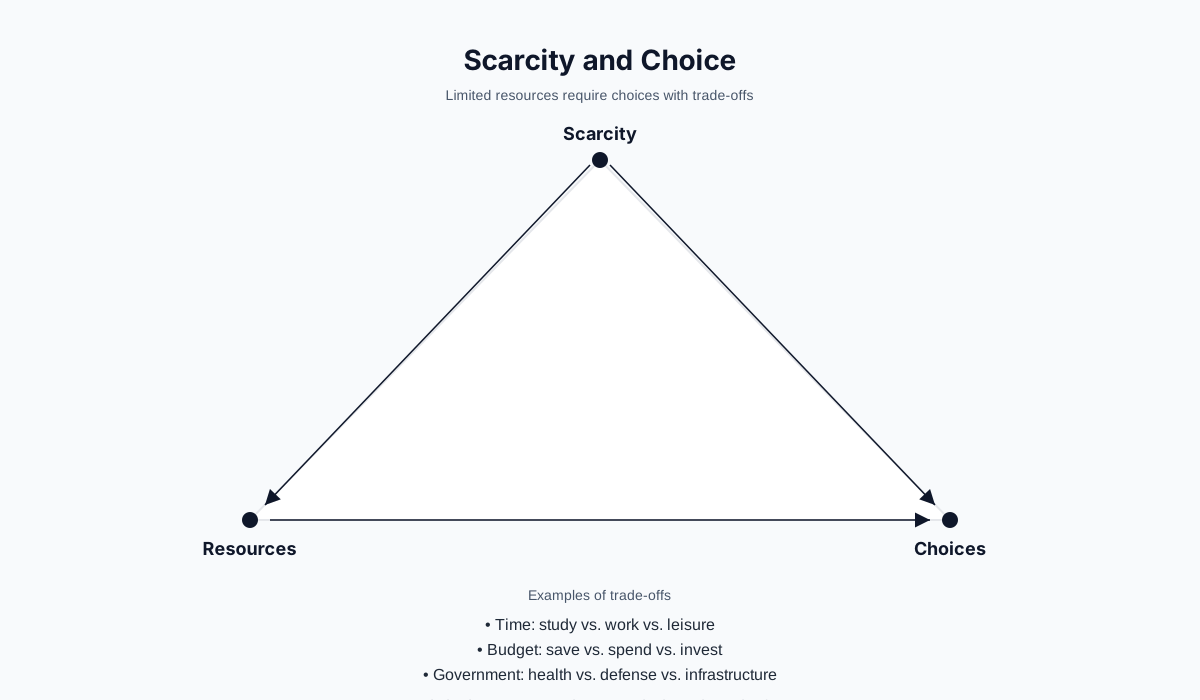
Caption: Scarcity pushes us to choose between alternatives. Each choice means giving up something else (opportunity cost).
Key Takeaways
-
Economics is about choices under scarcity.
-
Every decision has an opportunity cost.
-
Both individuals and governments face the same challenge: limited resources and unlimited wants.
-
Real-world events (like the pandemic) show economics isn’t just theory—it shapes lives and policies daily.