
Surplus and Shortage
Definition
Alfred Marshall, in Principles of Economics (1890), described how prices deviate from equilibrium: a surplus occurs when supply exceeds demand at a given price, while a shortage occurs when demand exceeds supply. (Marshall, Alfred. Principles of Economics)
Introduction
Think of a cricket stadium during a big match. If tickets are overpriced, seats remain empty even though fans want to watch — that’s a surplus of tickets. If tickets are underpriced, everyone queues up, but only a fraction gets in — that’s a shortage. Both situations show the market straying from equilibrium.
Explanation
-
Surplus (Excess Supply)
• Condition: Price set above equilibrium.
• Outcome: Producers supply more than consumers want.
• Effect: Unsold stock → pressure on sellers to cut prices. -
Shortage (Excess Demand)
• Condition: Price set below equilibrium.
• Outcome: Consumers want more than producers offer.
• Effect: Queues, rationing, resale markets → pressure on price to rise. -
Correction Mechanism
Markets self-adjust:
• Surplus → falling prices until supply = demand.
• Shortage → rising prices until demand = supply.
Diagram
-
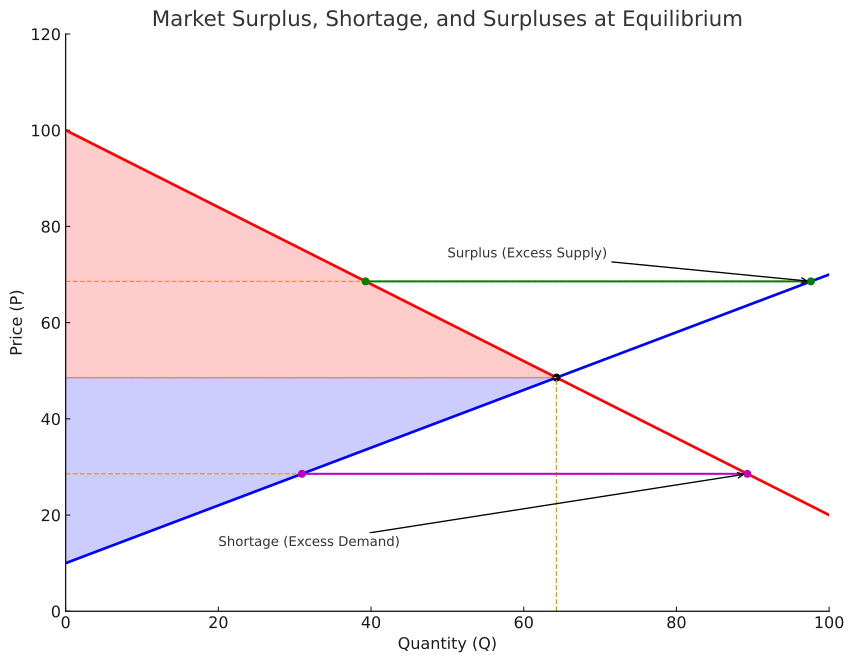
At equilibrium (P*, Q*), demand = supply.
-
If price is set above equilibrium (P high) → Surplus (excess supply): suppliers produce more than consumers are willing to buy.
-
If price is set below equilibrium (P low) → Shortage (excess demand): consumers demand more than suppliers are willing to produce.
-
At equilibrium:
-
Consumer Surplus (shaded red) = benefit consumers receive by paying less than they are willing.
-
Producer Surplus (shaded blue) = benefit producers receive by selling at a higher price than their minimum acceptable.
-
Real-World Case
Face Masks in 2020 (India)
At the pandemic’s start, demand for masks skyrocketed while supply lagged, resulting in an acute shortage and black-market premiums. Later, as factories scaled up and imports surged, markets even faced a surplus, leading to price drops.
Reference: Ministry of Textiles, Government of India. Press Release on PPE and Mask Production, 2020
Key Takeaways
-
Surplus: too much supply, unsold goods, downward pressure on price.
-
Shortage: excessive demand, rationing, or queues, resulting in upward pressure on prices.
-
Both are temporary disequilibria; markets tend to correct toward equilibrium.
-
In reality, government interventions (price controls, subsidies) can prolong either condition.