
Microeconomics vs. Macroeconomics
Definitions
-
-
Microeconomics
“Microeconomics studies the behaviour of individual economic agents such as households, firms, and industries, and their interactions in markets.” — Paul Samuelson, Economics (1948)
Read Samuelson’s Economics (Archive) -
Macroeconomics
“Macroeconomics studies the performance, structure, behaviour, and decision-making of an economy as a whole.” — N. Gregory Mankiw, Principles of Economics (1997)
Mankiw Principles of Economics (Cengage)
-
Explanation
Imagine economics as a zoom lens on a camera:
-
Microeconomics = Zoomed in
We focus on one shop, one family, one firm. How do they set prices? How much will they buy or sell if prices change?
Example: If the price of onions shoots up, how will one vegetable vendor adjust his stock, and how will families adjust their cooking? -
Macroeconomics = Zoomed out.
Now we pull the camera back to see the whole economy. We ask: what’s happening to GDP, unemployment, inflation, and trade?
Example: If onion prices nationwide rise, does it lead to an increase in overall food inflation? Will the government step in?
The two are interconnected. Millions of small (micro) decisions—like how many onions to buy—add up to macro effects (inflation, policy changes). At the same time, macroeconomic conditions—such as a recession—influence microeconomic decisions, like whether firms hire or lay off workers.
Real-life Case
The 2008 Global Financial Crisis is the perfect bridge:
-
At the micro level, individual banks gave risky loans, and families borrowed beyond their means.
-
At the macro level, the chain reaction triggered a collapse of financial markets, leading to a global recession.
IMF — The Global Financial Crisis: Anatomy and Responses
Diagram
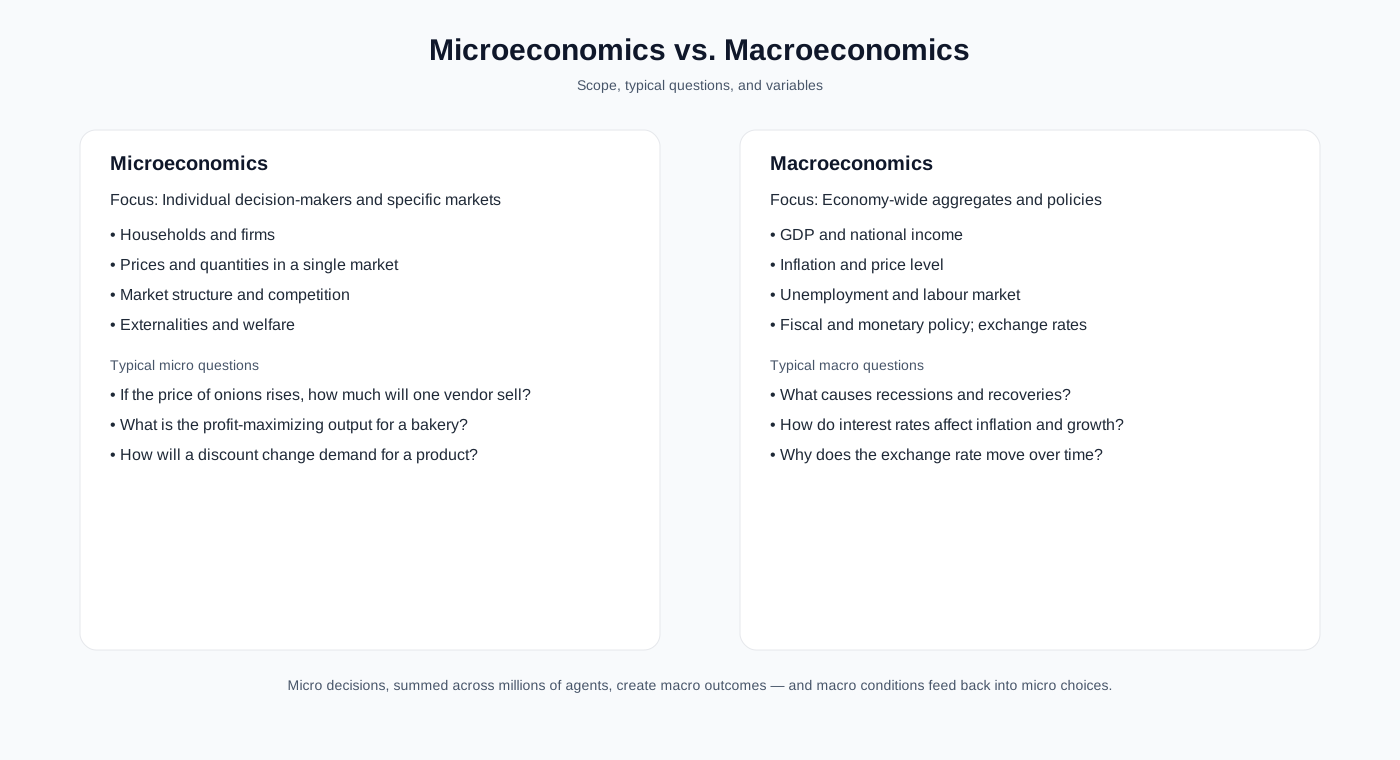
Caption: Micro looks at individual decision-makers; macro studies the entire economy. Both are interlinked.
Key Takeaways
-
Microeconomics: focuses on households, firms, and individual markets.
-
Macroeconomics focuses on aggregates, including GDP, inflation, and unemployment.
-
They are two sides of the same coin: micro adds up to macro; macro conditions shape micro.
-
The 2008 crisis demonstrated how micro choices (such as loans and mortgages) can lead to macro outcomes (a global recession).