
Elasticity of Demand
Definition
Alfred Marshall, in Principles of Economics (1890), described elasticity as the degree to which demand responds to price: “The elasticity of demand in a market is great or small according as the amount demanded increases much or little for a given fall in price, and diminishes much or little for a given rise in price.”
Marshall, Alfred. Principles of Economics
Introduction
Think of a rubber band. A gentle pull can stretch some bands a lot (elastic), while others barely move (inelastic). Goods behave similarly: when the price changes, some quantities demanded swing sharply (such as cinema tickets for students), while others hardly budge (such as table salt). Beyond price, demand also reacts to changes in income and the prices of related goods—captured by income and cross elasticities.
Explanation
1) Price Elasticity of Demand (PED)
-
What it measures: how responsive quantity demanded is to a change in the good’s own price.
-
PED = % change in Qd ÷ % change in P.
-
Elastic (>1): quantity moves more than price (luxuries, many substitutes).
-
Inelastic (<1): quantity barely moves (necessities, few substitutes, small budget share).
-
Unit elastic (=1): proportional change.
-
Drivers: availability of substitutes, share of income, time to adjust, habit/addiction.
2) Income Elasticity of Demand (YED)
-
Response of demand to income changes.
-
Normal goods: YED > 0 (demand rises with income).
-
Inferior goods: YED < 0 (demand falls as income rises).
-
Luxury goods: YED > 1 (demand grows more than proportionately).
3) Cross Elasticity of Demand (XED)
-
Response of demand for Good A when the price of Good B changes.
-
Substitutes: XED > 0 (price of tea ↑ → demand for coffee ↑).
-
Complements: XED < 0 (price of smartphones ↓ → demand for data plans ↑).
Manager/Policy Playbook
-
If demand is elastic, price cuts can raise revenue; if inelastic, price hikes may do so.
-
Tax goods with inelastic demand for steadier revenue (mind equity).
-
Track substitutes/complements to anticipate competitive moves.
-
Use income trends to forecast category growth.
Diagram
-
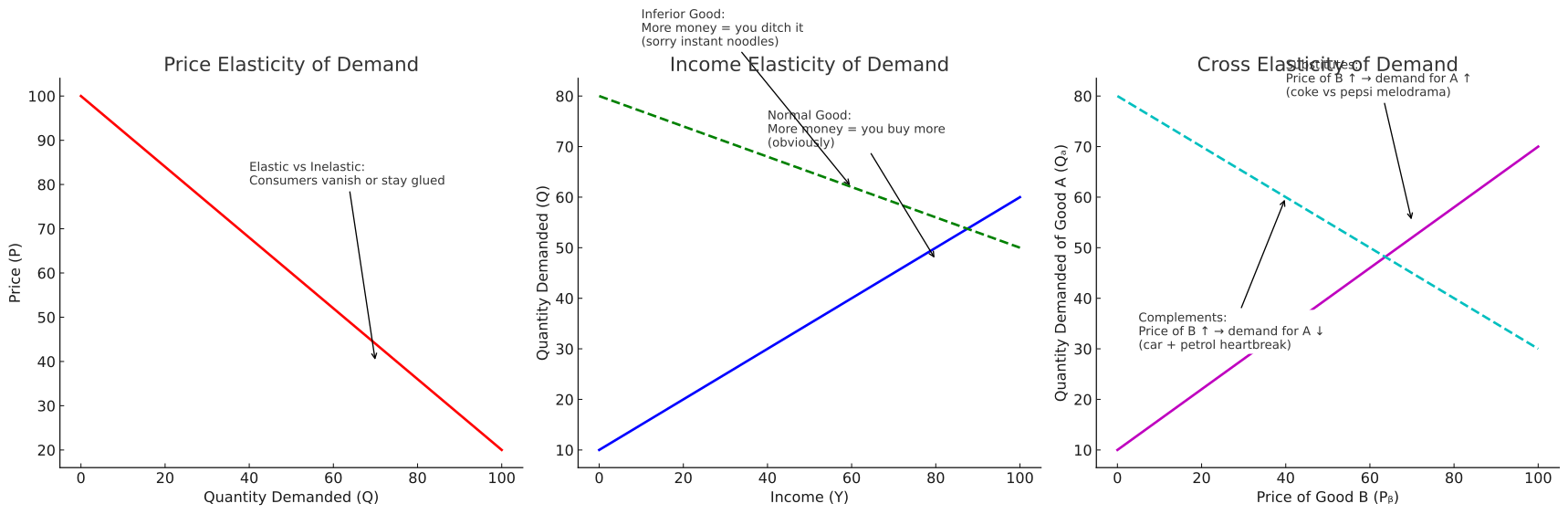
Price Elasticity → The classic: jack up the price and watch consumers either vanish or stick around like clingy exes.
-
Income Elasticity → Normal goods rise with your paycheck (yay, steak night!). Inferior goods? Say goodbye to instant noodles once you can afford sushi.
-
Cross Elasticity → Substitutes (Coke vs Pepsi soap opera), or Complements (car + petrol — raise one, cry over the other).
Real-World Case (Global)
Airline Tickets
-
PED: Leisure travelers are highly price sensitive—flash sales spark big booking spikes; last-minute business travel is much less responsive.
-
YED: As incomes rise, international leisure travel often grows faster than proportionately (positive income elasticity).
-
XED: High-speed rail or low-cost carriers draw demand away from legacy airlines (substitution).
Reference: IATA, “Air Travel Demand Elasticities”
Key Takeaways
-
Elasticity = responsiveness of demand to price, income, or related goods’ prices.
-
PED separates necessities (inelastic) from luxuries (elastic); context and time matter.
-
YED classifies goods as normal, inferior, or luxury.
-
XED quantifies substitute and complement relationships that shape market strategy.
-
Pricing, taxation, capacity planning, and forecasting all rely on solid elasticity estimates.