
Demand – Meaning and Law
Definition
Alfred Marshall, in Principles of Economics (1890), explained: “The amount demanded of a commodity depends on the price of that commodity, other things remaining constant.” (Marshall, Alfred. Principles of Economics)
Introduction
Imagine you walk into your college canteen hungry. If a samosa costs ₹10, you may buy two. If the same samosa costs ₹50, you might skip it altogether. That simple relationship—price falls, demand rises; price rises, demand falls—is at the heart of demand in economics. But remember: demand ≠ desire. I may desire a Ferrari, but without money, it’s not counted as demand!
Explanation
-
Demand = Desire + Ability to pay + Willingness to pay
-
Law of Demand: There is an inverse relationship between price and quantity demanded, holding all else constant.
-
Why does this happen?
-
Substitution Effect: If Pepsi’s price falls, people shift from Coke to Pepsi.
-
Income Effect: When prices fall, your money buys more, so you feel richer.
-
Diminishing Marginal Utility: The second slice of pizza is nice, but not as thrilling as the first—so you’ll only buy more if price is lower.
-
-
Exceptions to the law: Rare goods, such as Veblen goods (luxury status items) or Giffen goods (some staples), do not follow the usual law.
Diagram: Law of Demand Curve
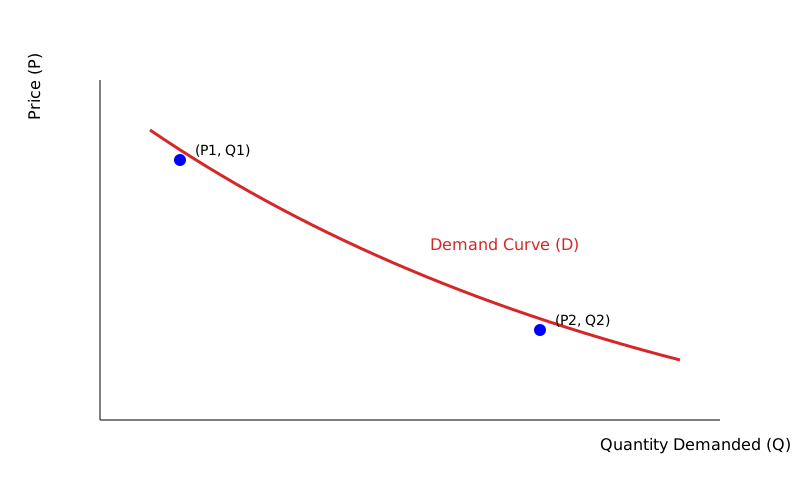 Diagram Explanation
The demand curve slopes downward: at a high price (P1), consumers buy a small quantity (Q1). At a lower price (P2), they buy a larger quantity (Q2). This shows the inverse relationship between price and demand.
Real-World Case
iPhone Price vs. Older Models
-
When Apple launches a new iPhone, older models drop in price.
-
As price falls, demand for those older models rises sharply, especially in price-sensitive markets.
-
A textbook demonstration of the law of demand.
Reference: Counterpoint Research (2022). India Smartphone Market Report.
Key Takeaways
-
Demand is effective desire backed by purchasing power.
-
The Law of Demand states that lower prices encourage more purchasing, while higher prices discourage it.
-
Causes: substitution effect, income effect, diminishing marginal utility.
-
Exceptions exist, but they are rare.